Same Diagnosis. Opposite Treatment.
Why Lifestyle Diseases Can No Longer Be Managed Generically
by Dr Cam McDonald
BSc (Hlth Ex Sci); MSc (Nut+Diet); PhD (Nut+Ex); FASLM
CEO of Precision Health Alliance
Lifestyle Medicine Is the Solution to Chronic Disease
Lifestyle Medicine is the key modality that will solve chronic disease. Not only because it addresses root causes, but because it gives us the ability to support best possible outcomes across prevention, performance, recovery and long term resilience.
However, for lifestyle medicine to truly fulfil this promise, it must evolve.
The next evolution required for best chronic disease management is precision.
Lifestyle Medicine is perfectly placed to lead this evolution. The foundations are already there. The science is strong.
The 2025 Lifestyle as Medicine roadshows and international conferences demonstrated this clearly. The keynote presentations highlighted the growing body of data showing that exercise, nutrition, sleep, stress regulation and behaviour change can dramatically shift metabolic disease, cardiovascular risk, neurodegeneration risk and mental health outcomes.
Ongoing studies continue to reinforce the power of lifestyle interventions.
But science, by its nature, is designed to progress. It is built to refine, to improve, to become more efficient and more effective in creating better patient outcomes.
And this is where we must confront a glaring issue that has been largely ignored for the past four decades.
The Problem of Non-Responders
There is a big problem.
Non responders are a powerful force in healthcare.
Between 15 and 40 percent of individuals may not respond to a particular exercise intervention. In weight loss trials it is common to see 25 to 50 percent non response rates.
In psychotherapy, response varies dramatically depending on personality structure and coaching alignment. Even sleep interventions produce different outcomes depending on circadian biology and behavioural traits.
Without moving toward personalised lifestyle medicine, we risk creating large numbers of people who do not respond, become dissatisfied, lose motivation and disengage.
Worse still, the intervention fails to prevent the very conditions lifestyle medicine is designed to address.
The next major step forward is precision and hyper personalised lifestyle medicine.
What Does Precision Lifestyle Medicine Mean
What does this actually mean?
To personalise care, the first essential step is to quantify the individual before any intervention begins.
We must understand:
- What are their preferred exercise modalities based on genetics and phenotype?
- What are their optimal chrononutrition patterns and specific nutrient requirements?
- What are their circadian rhythms and how do these influence stress and recovery balance?
- What is their disease risk profile? Are they more vulnerable to wasting conditions such as osteoporosis and sarcopenia, or accumulation based diseases such as fatty liver, T2DM and cardiovascular disease?
- How does their body adapt as health markers shift? If inflammation drops or glucose control improves, how should the intervention change?
- What is their preferred coaching style? Do they thrive on challenge? Do they prefer gradual change? Do they require family involvement? Or do they simply want information and autonomy?
- How does environment influence their physiology? Does insulin resistance increase in winter? Does blood pressure rise? Do bright lights exhaust them?
- Do cold environments impair digestion or motivation?
These are not minor details. They materially change outcomes.
The first step is to quantify this data before starting treatment, and even to guide what testing is appropriate. Testing everyone for the same variables is ineffective because different individuals have different pathophysiology driving the same diagnosis.
When this level of information is available, practice changes dramatically.
The multidisciplinary team works differently. The conversation shifts from treating a condition to understanding a person.
Artificial Intelligence vs Human Intelligence
To deliver this properly, we need more than artificial intelligence alone. We need Human Intelligence technology.
Artificial intelligence will take available data and synthesise it through pattern recognition based on previous averages. It is exceptionally good at identifying associations across populations.
Human Intelligence technology seeks to understand the individual first. It quantifies biological nuance, system dominance and adaptive patterns before interpreting any external data.
Same Diagnosis, Different Physiology
Consider a simple example.
Two individuals are diagnosed with T2DM.
Patient One
The first has a BMI of 19. She is naturally slender, with a propensity toward muscle loss and lower bone density. Her risk profile leans toward osteopenia and sarcopenia. She has higher sympathetic drive and tends to be more catabolic.
Patient Two
The second has a BMI of 31 even when fit and metabolically stable. He has strong bone density, high muscle mass and a natural tendency to gain weight under stress. His risk profile leans toward inflammatory accumulation based disease.
Both meet criteria for T2DM.
The Problem With Generic Guidelines
Standard guidelines would recommend lower carbohydrate intake, reduced calories for weight loss, 150 minutes of exercise per week including resistance training, sleep optimisation and an anti inflammatory diet.
But their pathophysiology is completely different.
Treatment for the Lean Patient
In the lean individual, impaired glucose disposal may be driven by low muscle mass and chronic sympathetic activation. Placing her in a calorie deficit could worsen muscle loss and further impair glucose handling. Her treatment focus should be on muscle gain, strategic resistance training and stress regulation. Weight loss is not the goal.
Treatment for the Higher BMI Patient
In the higher BMI individual, the primary drivers are likely chronic inflammation, excess adiposity and insulin resistance. Calorie reduction, strategic carbohydrate timing, weight loss and improved inflammatory control are essential.
The same disease requires completely different treatment strategies.
Supporting Clinicians With Precision Systems
Well trained clinicians understand this instinctively.
Human Intelligence technology supports and scales this reasoning process by quantifying the drivers before intervention begins.
If we continue treating conditions generically, lifestyle medicine will remain partially effective.
If we treat the individual, outcomes accelerate.
The Future of Lifestyle Medicine
We already have the knowledge.
We already have the technological capacity.
Many of us have been working with these systems for over a decade.
Patients and practitioners are increasingly open to AI supported care. But a large language model that is not clinically grounded cannot assemble the deep physiological patterns required for true precision.
The future of Lifestyle Medicine is not abandoning human expertise.
It is enhancing it.
Human Intelligence first. Artificial intelligence second.
When we do this, we reduce non response. We prevent frustration. We increase patient satisfaction. And we restore professional fulfilment, because we are consistently helping people rather than repeatedly encountering those who do not seem to change.
Learn More About Precision Lifestyle Medicine
If you would like free resources in precision Lifestyle Medicine, please reach out to cam@precisionhealthalliance.org. Let us know your specialty and what kind of information you would find most helpful.
There are also dedicated courses through the Masters of Precision Lifestyle Medicine and AI Medicine programs that support deeper learning and practical implementation of precision health in clinical practice. You are welcome to reach out to the same contact to explore these further.
Personalised behaviour change is equally critical, but that is a deeper discussion for another time.
For now, the direction is clear.
Lifestyle Medicine is the solution to chronic disease. Precision Lifestyle Medicine is the evolution that will make it fully effective.
Hautala AJ, Kiviniemi AM, Mäkikallio TH, Kinnunen H, Nissilä S, Huikuri HV, Tulppo MP. Individual differences in the responses to endurance and resistance training. Eur J Appl Physiol. 2006 Mar;96(5):535-42. doi: 10.1007/s00421-005-0116-2. Epub 2005 Dec 21. PMID: 16369817.
Claude Bouchard, Ping An, Treva Rice, James S. Skinner, Jack H. Wilmore, Jacques Gagnon, Louis Pérusse, Arthur S. Leon, and D. C. Rao Familial aggregation ofV˙o 2 max response to exercise training: results from the HERITAGE Family Study Journal of Applied Physiology 1999 87:3, 1003-1008
THOMAS, HANNAH J.; MARSH, CHANNA E.; MASLEN, BARBARA A.; SCURRAH, KATRINA J.; NAYLOR, LOUISE H.; GREEN, DANIEL J.. Studies of Twin Responses to Understand Exercise Therapy (STRUETH): Body Composition. Medicine & Science in Sports & Exercise 53(1):p 58-67, January 2021. | DOI: 10.1249/MSS.0000000000002461
Solomon, T. P. (2018). Sources of inter-individual variability in the therapeutic response of blood glucose control to exercise in type 2 diabetes: going beyond exercise dose. Frontiers in Physiology, 9, 896.
Hear Dr Cam McDonald at LM26 in Hobart
Join Dr Cam McDonald at LM26: The Nature of Health, taking place in Hobart this November. A clinician and leader in precision and preventive health, Dr Cam will share insights into how Lifestyle Medicine integrates with emerging models of care and personalised approaches to improving health outcomes.
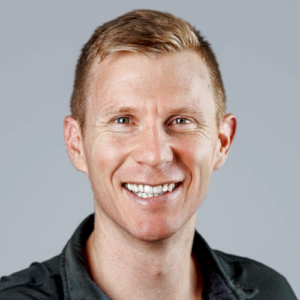
Dr Cam McDonald
Dr Cam McDonald is a leader, educator, and the CEO of the Precision Health Alliance, a leading organisation focused on educating health professionals in precision health. The PHA’s mission is to eliminate chronic disease and pain by 2050, establishing “healthy” and “resilient” as the norm. Dr McDonald is an exercise physiologist, accredited practicing dietitian, PhD scholar, and a Fellow of the Australasian Society of Lifestyle Medicine, and is an international authority in personalised health. He educates organisations and health professionals on how AI and precision health can help us understand the connection between our environment, physical health, and mental wellbeing. Dr Cam has shared the stage with luminaries such as the Dalai Lama, contributing to global conversations on health, wellbeing, and human consciousness. His work with the Precision Health Alliance has provided him working knowledge of the leading technologies and possibilities for AI in health and medicine.