Additional resources 1.10

Articles Lifestyle interventions for mental health (Manger, 2019) A multimodal intervention for improving mental health and emotional well-being of college students (Morton et al., 2017) An interdisciplinary approach to caring (Victoria State Government, n.d.) Interdisciplinary versus multidisciplinary care teams: do we understand the difference? (Jessup, 2007) The lifestyle medicine team: Health care that delivers value […]

Presentation references 1.10

Arnett, D. K., Blumenthal, R. S., Albert, M. A., Buroker, A. B., Goldberger, Z. D., Hahn, E. J., Dennison Himmelfarb, C. R., Khera, A. V., Lloyd-Jones, D. M., McEvoy, J. W., Michos, E. D., Miedema, M. D., Muñoz, D., Smith, S. C., Jr, Virani, S. S., Williams, K. A., Sr, Yeboah, J., & Ziaeian, B. […]

Presentation 1.10

Presented by Dr Michelle Reiss, MBChB, LMCC, CCFP, FRACGP, FASLM Download the slides for this presentation here: Multidisciplinary and interdisciplinary teams Presentation  

Recommended reading 1.10

Recommended reading Ten principles of good interdisciplinary team work (Nancarrow et al., 2013) Links may expire – If you find any links are not working, please let us know via info@lifestylemedicine.org.au.

Learning outcomes 1.10

Compare and contrast the difference between a multidisciplinary and interdisciplinary team Describe how to work in an interdisciplinary team effectively List examples of specific interdisciplinary and multidisciplinary models Relate experiences of working in interdisciplinary and/or multidisciplinary teams. Lessons learned: What worked well? What did not work? What can be improved?

Subscribe to our our Newsletter

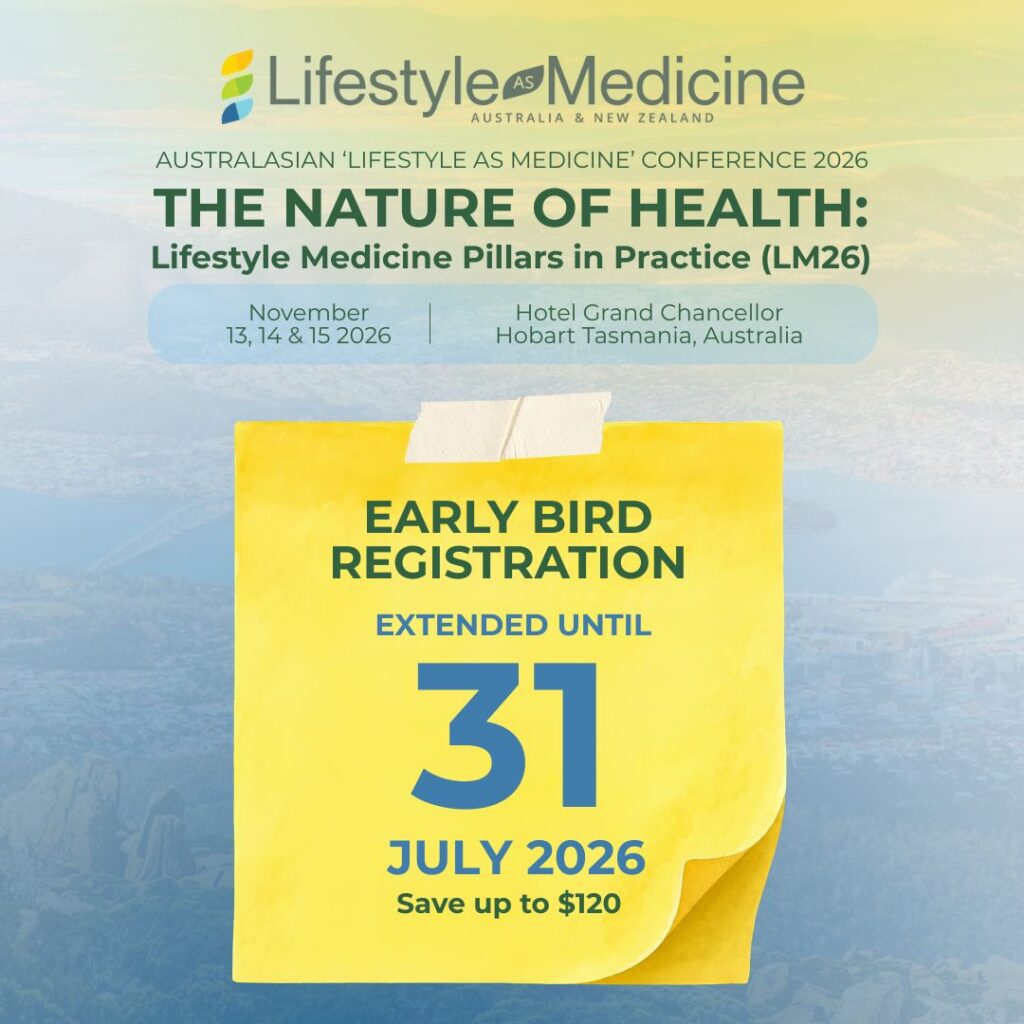
LM26 CONFERENCE

EARLY BIRD ON SALE NOW

Join us in Hobart for our annual Lifestyle Medicine conference as we explore how green and blue spaces, social connection, and the six pillars of Lifestyle Medicine can transform clinical and community care.

Register before 30 June 2026 to secure the last chance at a discount