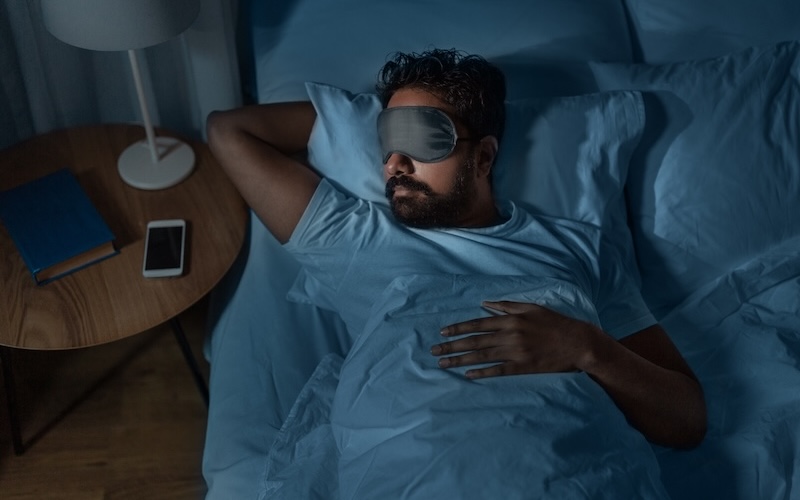
The Rhythm of Sleep
The Rhythm of Sleep – Audio Neuromodulation
As conversations around the importance of sleep increase, more data is being collected and clinical trials conducted to objectively establish the efficacy of interventions to improve sleep quality. While the numbers grow, sleep continues to be complex, with many factors influencing a person’s sleep quality.
Sleep is not a switch to be flipped but rather a rhythm to be supported.
Data helps us measure change. Clinical trials validate effectiveness. Validated tools like the Pittsburgh Sleep Quality Index (PSQI) quantify improvement. But sleep is ultimately experienced, not just recorded.
To get a full understanding of available sleep interventions, we should combine the knowledge gained from controlled clinical evidence with user experience.
SleepHub is one such sleep intervention – an audio neuromodulation device that emits low frequency tones, which guide the brain through the correct sequence of sleep cycles.
SleepHub Audio Neuromodulation Device: Clinical Evidence
Clinical data collected across several trials demonstrates that the use of SleepHub showed improvements in key markers of sleep quality by restoring natural sleep patterns and guiding the brain through the sequence of healthy sleep cycles. Trials focused on those who experienced insomnia, as well as a group who generally slept well. All participants showed an improvement in sleep quality.
Webinar – Sleep Innovations: Improving Sleep Quality Through Sound
Audio Neuromodulation to Treat Adult Insomnia: An Observational Study
SleepHub: In Practice
Beyond data points and statistical significance lies a more human question: Given diverse life challenges, what difference can healthy sleep make and how can it be achieved? Below are three case studies reflecting different sleep challenges and user experiences with the SleepHub device.Case Studies
Retired Senior
Profile:
80-year-old, female, difficulty falling and staying asleep during the last decade.
Challenge:
Total hours of sleep on a typical night ranged from 4 – 6 hours. Fragmented sleep with several nighttime wakening’s and trouble falling back to sleep.
Experience with SleepHub:
After the first two weeks of use, generally sleeping for six hours before waking. Awakenings became fewer and shorter. After six weeks of use, a typical night now includes six – eight hours of uninterrupted sleep and occasionally waking but able to fall straight back to sleep quickly.
Early Onset Parkinson’s Disease
Profile:
Early 50s, male, diagnosed with early onset Parkinson’s Disease in 2020.
Challenge:
Having been an exceptional sleeper prior to diagnosis, by mid-2022, he was frequently getting 2 – 3 hours of sleep per night.
Experience with SleepHub:
Improvement seen after first month of use. After eight months of use sleep is continuing to improve. A normal night now involves consistently getting 7 hours of uninterrupted sleep per night. Monitored sleep using Oura ring showing 20% improvement in total sleep time after one week of use. REM and Deep Sleep metric improved from limited or none to consistently close to or above one hour after eight weeks of use.
Fibromyalgia and Complex PTSD
Profile:
Early 30s, female, diagnosed fibromyalgia and complex PTSD.
Challenge:
Very long sleep onset, sometimes taking up to five hours to fall asleep. Sleep anxiety and frequent night wakings. Difficulty falling back to sleep after waking.
Experience with SleepHub:
Significant positive results were experienced after three months of use. A normal night now means falling asleep within one hour (rather than five). Still waking a few times each night but able to easily fall back to sleep.
What emerges from both evidence and lived experience is that when sleep regains rhythm — fewer awakenings, quicker sleep onset, greater efficiency — people often report something deeper than numbers. They report feeling restored.
In a world that accelerates constantly, technologies that support biological rhythm rather than compete with it may represent an important shift. Sleep is foundational
and sometimes, restoring its rhythm makes everything else easier to carry.
- Buysse DJ. Sleep health: can we define it? Does it matter? SLEEP. 2014;37(1):9–17.
- Baron KG, Duffecy J, Reutrakul S, Levenson JC, McFarland MM, Lee S, Qeadan F. Behavioral interventions to extend sleep duration: A systematic review and meta-analysis. Sleep Medicine Reviews. 2021;60:101532.
- Buysse DJ, Reynolds CF, Monk TH, Berman SR, Kupfer DJ. The Pittsburgh Sleep Quality Index: A new instrument for psychiatric practice and research. Psychiatry Research. 1989;28(2):193–213.
- Boyd P, Sternke EA, Tite DJ, Morgan K. “There was No Opportunity to Express Good or Bad”: Perspectives From Patient Focus Groups on Patient Experience in Clinical Trials. Journal of Patient Experience. 2024;11:23743735241237684.
- Dang-Vu TT, McKinney SM, Buxton OM, Solet JM, Ellenbogen JM. Spontaneous brain rhythms predict sleep stability in the face of noise. Current Biology. 2010;20(15):R626–R627.
- Ngo HVV, Martinetz T, Born J, Mölle M. Auditory Closed-Loop Stimulation of the Sleep Slow Oscillation Enhances Memory. Neuron. 2013;78(3):545–553.

Andrea Evers
Andrea Evers is a senior marketing and communications leader with extensive experience translating research into practical, industry-focused outcomes. She has led strategic communication, stakeholder engagement and education initiatives across research, health and industry organisations, with a strong focus on evidence-based messaging, behaviour change and professional education. In her current role at Wenatex, Andrea leads the marketing and operations functions to deliver informed, evidence-based approaches to sleep and overall wellbeing.