
What Vietnam Taught Me About Awe (and Why It Belongs in Lifestyle Medicine)
by Roni Beauchamp
ASLM CEO
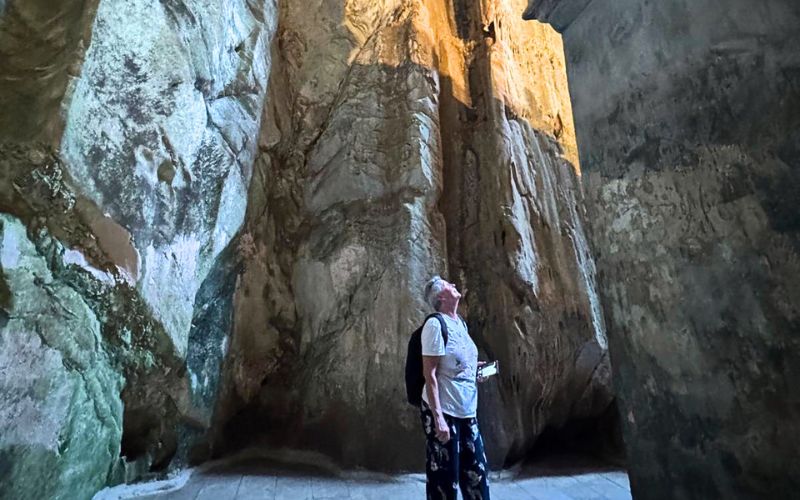
Late last month I found myself standing inside a cave in Vietnam, looking up at an enormous Buddha carved into the rock and wondering, among other things, how on earth anyone had managed to get it there.
We were at Marble Mountain, near Da Nang. You climb these worn stone steps and suddenly find yourself inside these extraordinary, almost cathedral-like caverns, with shafts of light coming through from above and huge Buddhist figures appearing out of the darkness.
It was one of those moments when everything else simply disappeared. No emails. No meetings. No list of things I should be doing. I was completely absorbed in where I was and what I was seeing.
A few days later, it happened again.
This time we were in the cable car heading up to Ba Na Hills, watching the Vietnamese countryside get smaller and smaller beneath us as we climbed into the mountains. I’m not sure the theme park waiting at the top was quite my thing, but the journey up certainly was. Even the engineering involved in getting a cable car that far up a mountain was pretty remarkable.
Since coming home, I’ve been thinking about those moments and about awe.
And, as so often happens when you start pulling at a thread, I discovered there is a growing body of research suggesting that awe may be much more important to our health and wellbeing than we give it credit for.

Buddha statue at Marble Mountain, Vietnam
There is actually some fascinating science behind awe
Dacher Keltner, a psychologist at UC Berkeley, has spent years studying awe. He describes it as the feeling we experience when we encounter something so vast, beautiful or extraordinary that it challenges our normal way of seeing the world.
It might come from standing on a mountain or looking out across the ocean. But it can also come from music, art, nature, spirituality, witnessing an extraordinary act of kindness or even contemplating something that suddenly makes us aware of how much bigger the world is than our own immediate concerns.
Keltner’s 2023 book, Awe: The New Science of Everyday Wonder, explores what happens to us when we experience it. Together with Maria Monroy, he has also looked specifically at awe as a pathway to mental and physical health.
And the research is interesting.
Awe has been associated with lower stress, changes in inflammatory processes and improvements in wellbeing. More recent studies have explored its relationship with loneliness and depression, including whether deliberately creating opportunities to experience awe might have measurable benefits.
Which made me wonder: where does awe fit within lifestyle medicine?
I came across an article published on KevinMD last year asking almost exactly that question: Why awe may be the missing pillar of lifestyle medicine.
I’m not suggesting we rush out and create a seventh pillar. But I do think there is something here worth paying attention to.
Perhaps we need more moments that take us outside ourselves
One of the things I love about this idea is that awe doesn’t require a trip to Vietnam.
It can happen walking somewhere beautiful. Watching a storm roll in. Listening to a piece of music that stops you in your tracks. Looking at the night sky. Standing in an old building and thinking about all the people who have stood there before you.
It can come through nature, art, music, spirituality, community or human connection.
And perhaps part of what makes it so powerful is that, for a moment, we stop being the centre of our own attention.
Our problems don’t necessarily go away, but our perspective on them can change.
That feels particularly relevant to lifestyle medicine.
We talk a great deal about what people should do: eat differently, move more, sleep better, manage stress, connect with others, reduce harmful substances.
All of those things matter enormously.
But perhaps there is also room to ask people what makes them feel wonder. What makes them stop. What connects them to something larger than the day-to-day business of their lives.
Maybe a prescription for awe isn’t quite as unconventional as it sounds.
And, as it happens, we’re going to explore exactly this in Hobart
This is one of the reasons I’m really looking forward to Vanita Smith’s session, Micromoments of Awe, at LM26 in Hobart this November.
It sits within our Sunday afternoon Meaning and Purpose stream, alongside Richard Thorpe talking about mattering and the future of social and nature-based prescribing, and Dr Clinton McCullough exploring why meaning matters for health behaviour.
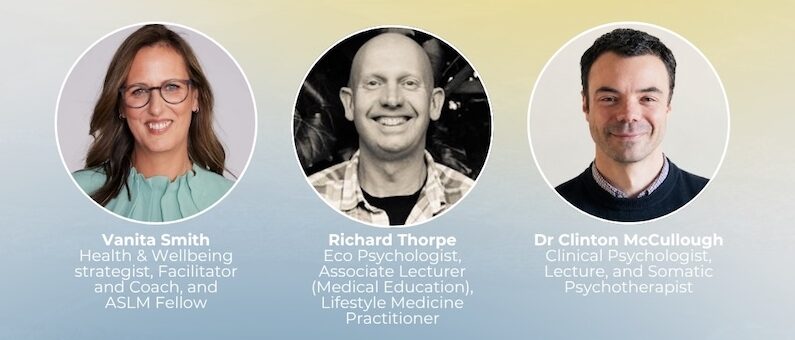
I think this whole part of the program is going to be fascinating because it takes us into an area of Lifestyle Medicine we don’t always give enough space to: what gives our lives meaning, what connects us, and what helps us flourish rather than simply function.
More to explore on Sunday at LM26
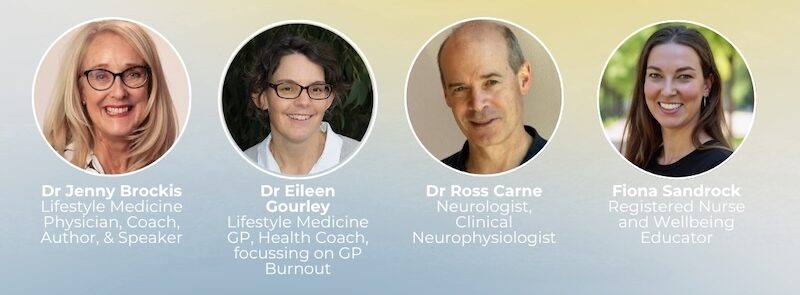
Sunday afternoon’s Meaning and Purpose session is part of what is shaping up to be an incredible final day in Hobart. Vanita will be joined by Dr Richard Thorpe, exploring More than Connection: Mattering and the Future of Social and Nature-Based Prescribing, and Dr Clinton McCullough on Why Meaning Matters for Health Behaviour: Implications for Lifestyle Medicine.
Across the day we’ll explore the pillars of Lifestyle Medicine, but also turn the lens back on ourselves as practitioners. Dr Jenny Brockis will host Practising What We Preach – Self-Care for Clinicians, with Dr Eileen Gourley, Dr Ross Carne and Fiona Sandrock exploring burnout, health coaching, attention and listening, reflective practice and what it really means to care for our own wellbeing while caring for others. There’ll also be concurrent sessions looking at new ways of working and bridging into lifestyle medicine, along with rapid-fire presentations showcasing some of the latest research.
And then we’ll bring the whole conference back to where I think it matters most: what does this actually look like in practice? Our final session, Short Talks, Big Ideas: Where to From Here?, will hear from colleagues about the practical ways they bring lifestyle medicine into their everyday work, whatever their setting. Because Lifestyle Medicine doesn’t require a particular job title, a dedicated clinic or a completely different way of working. Sometimes meaningful change really can begin with the very next patient encounter.
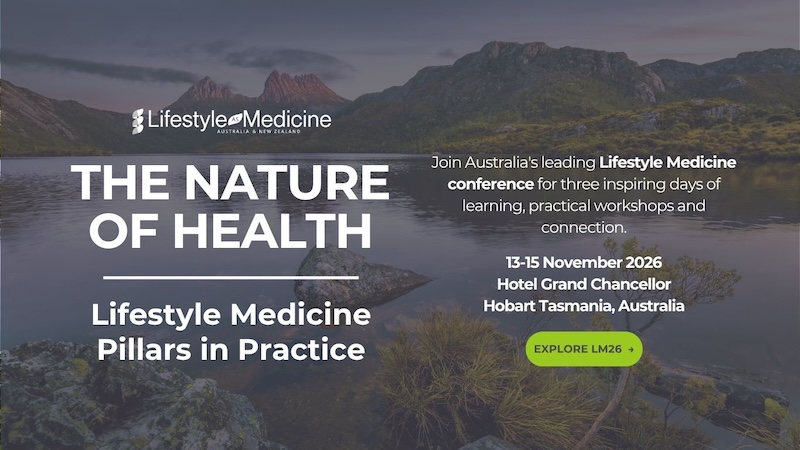
It feels like a fitting way to finish The Nature of Health.
As for Vietnam, I came home with some really great photos, some very happy memories, and, apparently, a little dose of measurable wellbeing as well.
I’ll happily take that.
This piece draws on the work of Dacher Keltner and Maria Monroy on awe and health, including their 2023 paper ‘Awe as a Pathway to Mental and Physical Health‘ in Perspectives on Psychological Science, along with more recent research published in Scientific Reports and discussion about the potential place of awe within lifestyle medicine. As with many emerging areas of research, the evidence continues to develop.

Roni Beauchamp
GCertEd, GDipMgt, MPPM
Roni is ALSM’s Chief Executive Officer. Prior to joining ASLM, Roni was the Director Operations, Heart Health with the National Heart Foundation of Australia, having worked in several roles with the Heart Foundation over the past eight years. Her professional interests include public policy, strategy, and leadership as well as a pursuit of better understanding of the human psyche and its impact on behaviour change for health reasons. Originally from the NSW snowy Mountains, and then the Victorian Alps she maintains a keen interest in improving health outcomes for people outside of the key metropolitan areas and of those who are disadvantaged in any way. Prior to moving to the Not-for-profit sector in 2013, Roni worked in a range of senior and executive roles in local and state government throughout Victoria. She holds a Master of Public Policy and Strategic Management.