Green Prescriptions: An Old Remedy, Reimagined
by Dr Jenny Brockis
A long tradition of healing through nature
Ideas about the healing power of the natural environment stretch back millennia. Hippocrates proposed that health arises from a dynamic equilibrium between our internal state and the external environment—an idea that ultimately shaped what we now recognise as the social determinants of health.
Centuries later, Florence Nightingale championed the restorative power of fresh air and sunlight for wounded soldiers. Healing gardens were created as sanctuaries for people with tuberculosis and as places of quiet reflection for those living with mental illness. Even the practice of “taking the waters” reflected an intuitive understanding that nature could restore balance.
Nature therapy: old wisdom, new evidence
In recent decades, engagement with nature as a therapeutic intervention has re-emerged—this time underpinned by a rapidly expanding body of peer‑reviewed, evidence‑based research. As a result, nature‑based programs are now finding their way into government health policy as part of the response to modern health challenges.
The rising burden of chronic disease—driven in part by sedentary lifestyles, poor nutrition, chronic stress, sleep deprivation and loneliness—demands more than the traditional reactive model of Western medicine that relies heavily on technology and pharmaceuticals.
Nature is not being positioned as a replacement for modern medicine, but as a powerful adjunct: a low‑cost, accessible way to help prevent disease, restore wellbeing and support long‑term health.
The COVID‑19 pandemic reinforced this message for many people, highlighting just how valuable green and blue spaces are for both mental and physical health. The challenge now is practical rather than philosophical: how do we intentionally create time in busy lives to sit, walk, run, play—or simply rest—outdoors?
The opportunity for lifestyle medicine
For Lifestyle Medicine practitioners, this represents a significant opportunity. We can support, enable and advocate for equitable access to green and blue spaces within our communities—recognising them as essential health infrastructure rather than optional extras.
Getting the message across: Coastrek as a case study
I first met Di Westaway OAM in Sydney, where she was speaking to a group of businesswomen about her coastal trekking company, Coastrek, which runs charity hiking events along Australia’s eastern seaboard. I remember thinking at the time: what a brilliant idea—this needs to come to Western Australia.
Fast forward to 2022, and that wish became reality. Coastrek Margaret River launched, and I joined 1,300 intrepid women to walk either 20 or 35 kilometres, raising funds for Beyond Blue.
Di has been involved in the Lifestyle Medicine movement since its inception and recently completed her Master’s of Lifestyle Medicine at Avondale University. As part of her studies, she contributed to research examining the scale, duration and economic value of mental health benefits derived from an established nature‑based program: Coastrek.
This research became the focus of a recent conversation we shared on ABC Nightlife.
What the research tells us
Before each Coastrek event, participants undertake a compulsory 12‑week training program designed to build fitness, reduce injury risk and maximise the likelihood of completing the walk.
In the study, participants completed the Personal Wellbeing Index at three time points:
- before commencing training
- at the end of the program
- three months later
Key findings
- Overall wellbeing improved by 5.1%.
- The critical factor was training in nature, which produced the greatest mental health benefits.
- Nature‑based training doubled the duration of benefit, with positive effects lasting up to 12 months.
- The mean economic value of mental health benefits was estimated at AU$4,000 per participant, equating to approximately AU$20 million per year.
Why nature immersion supports mental health
While the mental health benefits of time spent in nature are increasingly well recognised, the mechanisms are multi‑layered and extend beyond mood alone.
1. A sense of unity and connection
Social connection is fundamental to human health and survival. Coming together around a shared purpose—such as Coastrek—can evoke kama muta, a Sanskrit term meaning “being moved by love.”
Whether through a shared walk, a pilgrimage, a team ascent of a mountain, or collectively witnessing a breathtaking landscape, we are united by experience. That familiar surge of warmth, goosebumps, or even happy tears—the “oh, what a feeling”—reflects deep emotional connection.
Just as importantly, these moments offer respite from daily stressors: emails, bills and worries fade into the background.
2. Improved mood and reduced stress
A 2022 systematic review and meta‑analysis by Grassini demonstrated that nature walks significantly improve mental health and represent a cost‑effective intervention for anxiety and depression.
Exposure to nature has been shown to reduce activity in brain regions associated with rumination. When outdoor access is limited, similar benefits can be achieved by:
- views of green space through windows
- indoor plants
- images of nature
- natural materials such as wood and stone
Accessibility matters. People living with disability, limited mobility, or those facing social or cultural barriers may require thoughtful urban planning to ensure safe and inclusive access to nature.
3. Stress reduction and improved cognition
Spending as little as 20 minutes in a green space can significantly lower cortisol levels. Even 10 minutes can make a measurable difference—making a “nature pill” both flexible and achievable within daily routines.
4. Restored attention and concentration
Navigating uneven terrain—tree roots, rocks or coastal paths—demands focused attention. Beyond this, nature facilitates soft fascination, a key principle of Attention Restoration Theory.
Soft fascination allows the brain’s directed attention capacity—depleted by prolonged screen time—to recover. Nature’s aesthetic beauty supports reflection, perspective and appreciation of the wider world.
5. Greater happiness and creativity
Connection with nature is associated with greater life satisfaction, positive emotions (including joy, awe and serenity) and enhanced creativity. Importantly, higher levels of biodiversity appear to amplify these benefits.
From exposure to connection: setting intention
Simply being in nature is not always enough—it is how we engage that matters.
Actively noticing nature might involve:
- listening intentionally to birdsong
- pausing to observe a flower in detail
- watching a bee collect pollen
This deliberate attention deepens nature connectedness and enhances wellbeing.
Making green prescriptions practical
Incorporating nature into everyday life does not need to be complex or expensive. A simple nature prescription—encouraging patients to step outside and actively notice their surroundings—can be a powerful starting point.
Green prescriptions offer a practical, evidence‑based way to reconnect people with a timeless, readily available resource for health and healing.
Boyd, F., Allen, C., Robinson, J. M., & Redvers, N. (2024). The past, present, and future of nature and place-based interventions for human health. Landscape Research, 49(1), 129–145. https://doi.org/10.1080/01426397.2023.2244430
M. Chauvenet, A. L., Wardle, C., Westaway, D., & Buckley, R. (2025). Duration and economic value of a walking-in-nature therapy programme: Implications for conservation. People and Nature, 7(11), 2895-2910. https://doi.org/10.1002/pan3.70165
Grassini S. A Systematic Review and Meta-Analysis of Nature Walk as an Intervention for Anxiety and Depression. J Clin Med. 2022 Mar 21;11(6):1731. doi: 10.3390/jcm11061731. PMID: 35330055; PMCID: PMC8953618. https://pmc.ncbi.nlm.nih.gov/articles/PMC8953618/
Bratman, G. N., Hamilton, J. P., Hahn, K. S., Daily, G. C., & Gross, J. J. (2015). Nature experience reduces rumination and subgenual prefrontal cortex activation. Proceedings of the National Academy of Sciences, 112(28), 8567-8572. https://doi.org/10.1073/pnas.1510459112
Ohly, H., White, M. P., Wheeler, B. W., Bethel, A., Ukoumunne, O. C., Nikolaou, V., & Garside, R. (2016). Attention Restoration Theory: A systematic review of the attention restoration potential of exposure to natural environments. Journal of Toxicology and Environmental Health, Part B, 19(7), 305–343. https://doi.org/10.1080/10937404.2016.1196155
Richardson, M., Hamlin, I., Butler, C.W., Thomas, R. and Hunt. A. (2021). Actively Noticing Nature (Not Just Time in Nature) Helps Promote Nature Connectedness. Ecopsychology ahead of print. https://doi.org/10.1089/eco.2021.0023
Hear Dr Jenny Brockis and Di Westaway at LM26 in Hobart
Dr Jenny Brockis has a gift for translating complex science into practical, compassionate guidance that clinicians can apply immediately in practice.
Di Westaway OAM is one of Australia’s most respected adventurers and leadership voices. Di brings powerful insight into resilience, mindset, purpose and what it means to live well in an unpredictable world. Her work sits beautifully at the intersection of nature, mental wellbeing and human performance.
We look forward to welcoming them to LM26 – The Nature of Health: Lifestyle Medicine Pillars in Practice, held 13–15 November 2026 at the Hotel Grand Chancellor, Hobart, Tasmania.
Join us for three inspiring days of learning, connection and evidence-based Lifestyle Medicine in one of Australia’s most beautiful natural settings.
Read Dr Jenny’s Book – The Natural Advantage
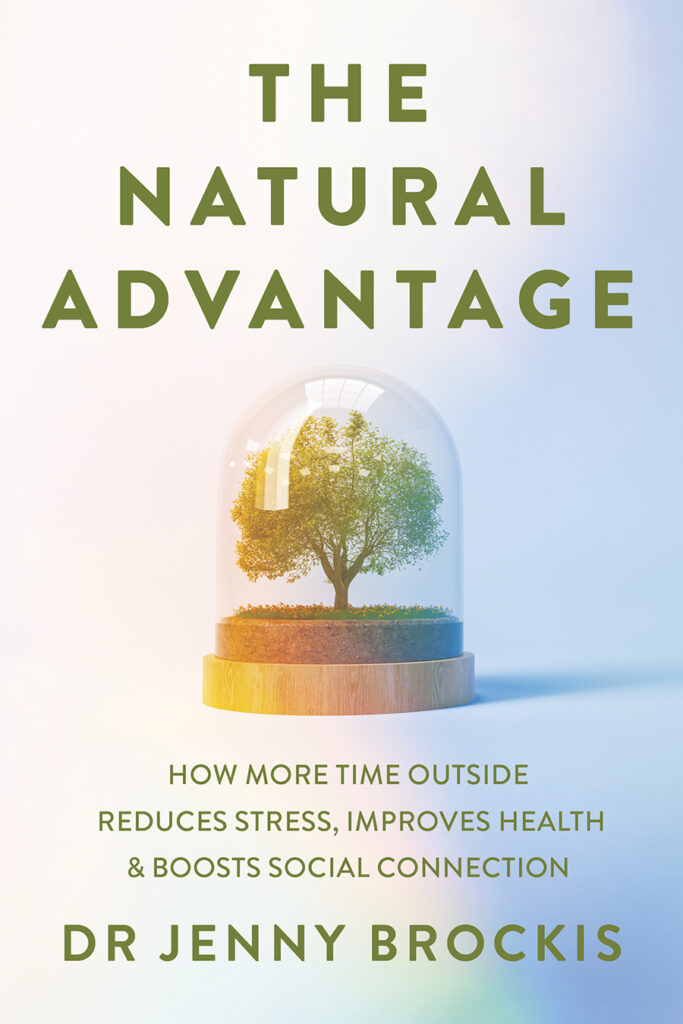
The Natural Advantage provides practical, evidence-based strategies grounded in Lifestyle Medicine to help you restore your health through the power of nature. Whether you’re an outdoor enthusiast or just starting to explore how the outdoors can enhance your wellbeing, this book is a must-read.
You can purchase your copy of The Natural Advantage on Dr Jenny Brockis’ website: The Natural Advantage by Dr Jenny Brockis. Discover how time in nature can support your journey to better health, reduce stress, and promote a lifestyle that embodies the principles of Lifestyle Medicine!

Dr Jenny Brockis
MB ChB (Bristol), GDipCertNutr&EnvMed, DipPsych
Dr Jenny Brockis is an Internationally Board-Certified Lifestyle Medicine Physician and Fellow of the Australasian Society Lifestyle Medicine (FASLM), specialising in brain health, mental wellbeing and psychological safety. After running her own group medical practice for many years, she chose to step out of the consulting room and into the workplace, speaking, consulting and running workshops through her business Brain Fit. Always passionate about people and their wellbeing, Jenny works with business leaders and individuals to inspire the creation of happy and healthy workplaces so everyone can bring their best selves to work.
She has enjoyed media coverage on local and national radio and TV and is a prolific writer with around 900 blog posts on her website www.drjennybrockis.com and had hundreds of published articles in print and online for various media outlets. She is the author of five books including the best seller Future Brain. Her latest book is The Natural Advantage - How more time outside reduces stress, improves health & boosts social connection.